


I am a composer with a passion for crafting excellent music that moves the emotions and tells powerful stories.

The Modern Man (SHORT FILM)
A short film I co-scored alongside Carl Vaudrin and Benjamin Beladi. It won Best Original Score (Short Film - Live Action) at the 2022 Hollywood Music in Media Awards.

Tomb raider reloaded (video Game)
I was on the composing team at Stamp Audio for this upcoming Lara Croft game from Square Enix. It was an official nominee for the 2021 Hollywood Music in Media Awards.

PRINCESS CUT 2 & 3 (FEATURE FILMs)
A pair of dramatic sequels by directors Paul and Sheilah Munger.

LINEAGE w (Video game)
A MMO role playing game by NCSOFT that I wrote some tracks for.

HOTEL LIMBO (feature film)
A romantic comedy I co-scored alongside Carl Vaudrin and Ben Beladi.

NCSOFT TINY KIDS PARK (Amusement park)
I composed a fun theme for this children's park in South Korea.
CUSTOM FILM SCORING FOR VISUAL MEDIA
When you combine moving images with music the storytelling potential is massive. When your visual media project (film, TV, documentary, promotional, game, etc.) has a well-crafted, thoughtfully-placed score that is aligned to the heart and arc of your story, matched to its mood and aesthetic, and formed out of a trusting relationship defined by integrity and clear communication, the results can be remarkable.
Results like these are my goal as a film composer. And to accomplish that goal, I believe three points of focus must be present. Just as a three-legged stool's stability depends on the integrity of its three legs, so a film score will fail to meet its potential if any of these elements are weak or absent.
STORY
This is really what it's all about. Working with the director to get to the very essence of his vision for the project and discover both the heart and the arc of the story is paramount to me. If the soul of the story is missed nothing else matters.
GREAT MUSIC
The music must not only fit the needs of the story, but be truly excellent and genuinely moving as well. To wield music is to wield emotions, and so high standards in composition, execution, and production are essential to me.
RELATIONSHIP
Trust. Integrity. Respect. Clear communication. These things are vital in any strong and productive relationship, and film-making is no exception. I care about the people I work with.
LISTEN TO MY MUSIC

COURSES AND RESOURCES for composers!
If you are interested in learning about film scoring or how to use virtual instruments, check out my instructional site for in-depth courses, articles, and free resources specifically designed to prove practical help and instruction for composers.

FREE CINEMATIC INSTRUMENTAL ALBUM DOWNLOAD!
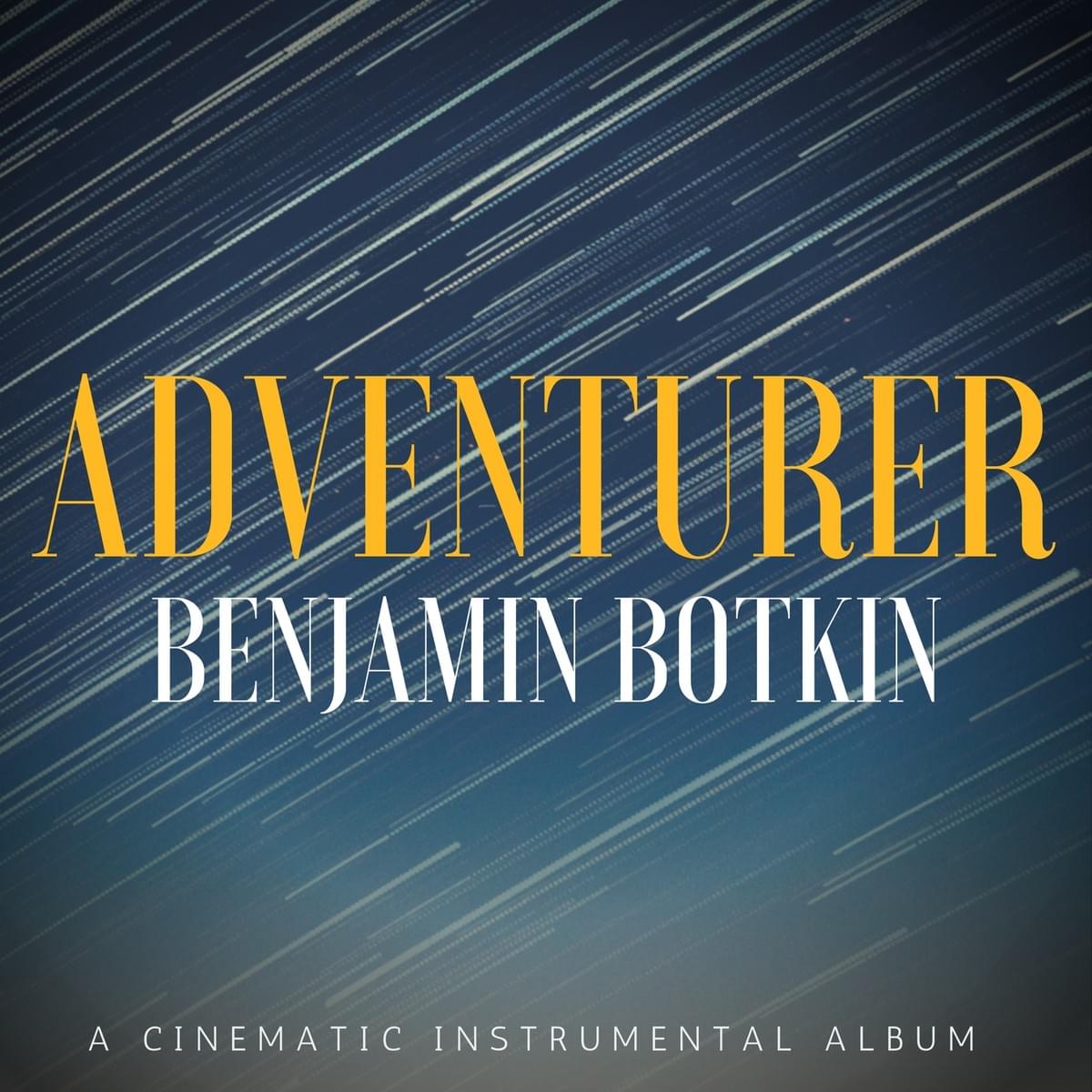
For the month of April 2020 (and possibly longer) I have decided to make my 2017 cinematic instrumental album "Adventurer" completely free as an MP3 download for whoever is interested!
This album is a collection of some of my favorite previously-unreleased orchestral tracks.SELECTED PROJECTS
FILM + GAME
The Modern Man (2022 - Feature Film - co-composed with Benjamin Beladi and Carl Vaudrin)
Lineage W (2021 - Video Game)
Tomb Raider Reloaded (2023 - Video Game)
AION 8.0 (2021 - MMORPG Video Game Update)Hotel Limbo (2020 - Feature Film - co-composed with Benjamin Beladi and Carl Vaudrin)
Second Chances (2020 - Feature Film)
Princess Cut 3 (2020 - Feature Film)Princess Cut 2 (2020 - Feature Film)
Blockbuster (2019 - Audio Drama/Podcast - Co-Composed with Ryan Taubert)
Prairie Wind (2018 - Short)
Death Star Construction Time Lapse (2017 - Star Wars Short Fan Film)
The Screenwriters (2016 - Feature Film)
The Heritage Foundation video (2016 - Documentary)
Polycarp: Destroyer of Gods (2015 - Feature Film)
Erwin Brothers Motion Pictures Logo Theme (2015)
The Worldview in 5 Minutes Show Theme (2015)
Building the Machine (2014 - Documentary)
Ace Wonder: Message from a Dead Man (2014 - Feature Film)
Navigating History: Egypt (2011 - TV Travel Series)
The Promise of Sheboygan County (2011 - Promotional Video)
The Mysterious Islands (2009 - Documentary co-composed with Paul Mills)
Wanted (2009 - Short Film)
Homeschool Dropouts (2009 - Documentary)
The Return of the Daughters (2007 - Documentary)Jamestown: Ancient Landmark, Modern Battleground (2007 - Documentary)
Men O' War (Short Film)
The League of Grateful Sons (2005 - Documentary)
ALBUMS/VIRTUAL ORCHESTRATION
The Prayer - (2018 - Virtual Orchestra Performances)
Holy Place (2018 - Arrangement/Virtual Orchestration featuring pianist Greg Howlett)
Be Still My Soul (2018 - Arrangement/Virtual Orchestration featuring pianist Greg Howlett)
I Believe - (2018 - Virtual Orchestra Performances)
Masterbuilder (2017 - Arrangement/Virtual Orchestration featuring pianist Greg Howlett)
Adventurer (2017 - Instrumental Album)
An American Victory (2016 Broadway Musical - Virtual Orchestral Performances)
The Screenwriters (2016 - Original Soundtrack)
Polycarp: Destroyer of Gods (2015 - Official Soundtrack)
The Look (2015 - Arrangement/Virtual Orchestration featuring vocalist Niah Merril)
The End of Myself (2015 Album - Arrangements and Virtual Orchestrations featuring vocalist Daniel Craig)
The End of Myself (2013 - Single, Co-composed with Daniel Craig)
Saga (2012 - Instrumental Album)
Navigating History: Egypt (2011 - Original Soundtrack)The Mysterious Islands (2009 - Original Soundtrack co-composed with Paul Mills)
The Return of the Daughters (2007 - Original Soundtrack)
OFFICIAL SAMPLE LIBRARY DEMOS
Berlin Strings (Orchestral Tools)
Berlin Strings Con Sordino (Orchestral Tools)
Berlin Symphonic Strings (Orchestral Tools)
Berlin Brass (Orchestral Tools)
Berlin Percussion (Orchestral Tools)
Berlin Woodwinds (Orchestral Tools)
Berlin Woodwinds Revive (Orchestral Tools)
Berlin Woodwinds Soloists I (Orchestral Tools)
Berlin Woodwinds Soloists II (Orchestral Tools)
Tallinn (Orchestral Tools)Metropolis Ark I (Orchestral Tools)
Metropolis Ark II (Orchestral Tools)
Metropolis Ark 5 (Orchestral Tools)
Igudesman Solo Violin (Orchestral Tools)
Andea (Orchestral Tools)
Modus - Jeff Russo (Orchestral Tools)LA Sessions (Orchestral Tools)
Vivid Keys (Orchestral Tools)
Loire (Orchestral Tools)
Nocturne Violin (Orchestral Tools)
Nocturne Cello (Orchestral Tools)
Joshua Bell Violin (Embertone)
Jubal Flute (Embertone)
Ivory Winds (Embertone)
Soaring Strings (Musical Sampling)
Adventure Brass (Musical Sampling)
Adventure Strings (Musical Sampling)
Miroslav Philharmonik 2 (IK Multimedia)
Contact


Benjamin Botkin © 2021